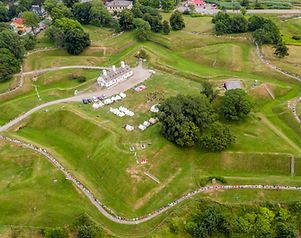
NOVA SCOTIA'S CAPITAL I ACADIAN COMMUNITY
Acadian Halifax
ACADIAN POPULATION
10,000+ francophones
KEY COMMUNITY
L'Acadie de Chezzetcook
KEY ORGANISATIONS
CCGH
AFH
CDÉNÉ
COMING SOON
La Chaloupe
New Acadian cultural centre
KNOWN FOR
Francofest
Grou Tyme festival Acadian harbour history
Most visitors come to Halifax for the harbour, the Citadel, and the waterfront. What they don't always expect is the Acadian soul woven through the city. Halifax Regional Municipality is home to the largest Acadian and francophone community in Nova Scotia, over 10,000 residents whose mother tongue is French, representing 34% of the province's total francophone population. Acadian francophones have been present in the Halifax area since the 18th century, when Acadians who escaped deportation made their way across the harbour to Chezzetcook.
Today, that community still thrives, and in the city itself, a vibrant network of Acadian and francophone organizations, festivals, schools, and cultural spaces keeps the language and culture alive in Canada's Ocean Playground. A new chapter is opening in 2026 with La Chaloupe, Halifax's first dedicated Acadian and francophone cultural centre, currently under construction on the Halifax peninsula.
MODERN ACADIAN COMMUNITY
The Acadian Community of the Halifax Region
From the historic farmstead of Chezzetcook to the festivals and cultural organisations of the city, the Acadian presence in Halifax is both deep-rooted and forward-looking.
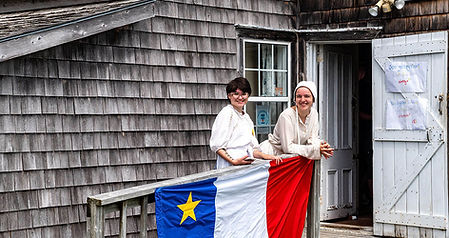
L'Acadie de Chezzetcook
Acadian Heritage Site I Living History I Food
Just 30 minutes east of Halifax, L'Acadie de Chezzetcook is where Acadian heritage becomes a hands-on experience. Tour a 19th-century farmstead, watch ancestral skills demonstrated by local families, bread baking, rug hooking, butter churning, and savour homemade Acadian dishes at La Cuisine de Brigitte. The name Chezzetcook comes from the Mi'kmaq, meaning "the place where water quickly spreads in many directions."

Halifax — Acadian Soul in the Capital
Urban Acadian Culture I Festivals I History
Halifax is a bilingual capital city where over 10,000 francophones live and work, served by Acadian schools, community organisations, radio stations, festivals, and a new cultural centre opening in 2026. The Acadian story is not just in the countryside. It is here too, in the streets, the music, and the community.
WHAT MAKES IT UNIQUE
What Makes Acadian
Halifax Region Unique
Halifax is where the Acadian story meets urban life, a city with deep Acadian roots, a thriving francophone community, and a cultural scene that surprises most visitors.

The Largest Acadian Community
in Nova Scotia
It surprises many people to learn that Halifax Regional Municipality is home to more Acadian and francophone residents than any other region in Nova Scotia. Over 10,000 people whose mother tongue is French live in the HRM — 34% of the entire provincial francophone population — alongside nearly 50,000 self-identified bilingual individuals. This is not a small heritage enclave. It is a living, working, urban Acadian community with its own schools (Conseil scolaire acadien provincial), media (Radio-Canada, Le Courrier de la Nouvelle-Écosse, community radio C98FM), and institutions that serve francophones across the capital region year-round.
Acadian History in the Halifax Harbour
Halifax's relationship with the Acadian story is more personal than most visitors realise. Between 1755 and 1764, around 900 Acadians were brought to Halifax as prisoners awaiting deportation — many housed in brutal conditions on Georges Island in the middle of the harbour. Some were deported. Others were eventually released in 1764 and made their way across the harbour to Chezzetcook, where they rebuilt their lives and founded the community that exists today. Parks Canada's Georges Island National Historic Site, visible from the waterfront, is a place where this largely untold chapter of Acadian history can be encountered directly.

A Living Acadian Cultural Scene
The Conseil communautaire du Grand-Havre (CCGH), founded in 1991, is the heart of Acadian and francophone cultural life in Halifax. It produces two flagship festivals: Francofest, the annual celebration of francophone cultures held every October, and Grou Tyme, which celebrates specifically Acadian culture and community. The Alliance française d'Halifax, established in 1903, provides French-language education and cultural programming. Together, these organizations ensure that Acadian and francophone culture is not just preserved in Halifax, it is actively celebrated, year after year.
La Chaloupe.
A New Chapter Opens in 2026
The most exciting development in Halifax's Acadian world is La Chaloupe, the new Acadian and francophone cultural centre currently under construction on the Halifax peninsula, set to open in 2026. Named after the traditional flat-bottomed boat, La Chaloupe will include a 220-person black-box theatre, a cultural café and community kitchen, studios for the community radio station C98FM, and shared spaces for community partners. It is being built in partnership with the new École Mer et Monde. La Chaloupe represents a generational investment in Acadian cultural life in Nova Scotia's capital, and a landmark destination for Acadian cultural tourism in Halifax for years to come.
FEATURED EXPERIENCES
Road Trips Through Halifax
From a living 19th-century Acadian farmstead to a historic harbour full of Acadian stories, here is what to see in the Halifax region
GETTING AROUND
Finding Your Way Through
Acadian Halifax Region
Pomquet and Torbé sit along the Eastern Shore between Antigonish and Cape Breton — a scenic coastal route that connects naturally to the Cape Breton Acadian communities.
Halifax to Chezzetcook
~30 mins
Via Hwy 107
Halifax to Grand-Pré
~1 hrs
Via Hwy 101
Halifax to Pomquet
~2 hrs
Via Hwy 104
PLAN YOUR VISIT
Planning Your Acadian Halifax Visit
Everything you need to know before you arrive.
Getting here
Halifax is Nova Scotia's capital and main entry point, served by Halifax Stanfield International Airport with direct flights from across Canada, the US, and Europe. VIA Rail and bus services also connect Halifax to the rest of Canada. The city is approximately 1 hour from Grand-Pré, 3 hours from Yarmouth, and 3.5 hours from Cape Breton via the Canso Causeway.
Getting around
The Halifax waterfront and city centre are walkable. A car is recommended to reach Chezzetcook (30 minutes east) and to begin any of the road trip circuits. Halifax Transit and ferry services cover the core city and Dartmouth. Rental cars are widely available at the airport and downtown.
Best time to visit
Halifax is a year-round city. For Acadian cultural experiences specifically: L'Acadie de Chezzetcook is open July 1 to August 30 for full programming (tearoom open April to December). Francofest takes place every October. August 15 (National Acadian Day) brings Tintamarres events across the city. The CCGH runs Acadian and francophone programming year-round — check heho-halifax.ca for current listings.
FR
Language
Halifax is a city where Acadian French is spoken, heard, and celebrated. French-language media includes Radio-Canada television and radio, Le Courrier de la Nouvelle-Écosse (weekly Acadian newspaper), and community radio C98FM. The Alliance française d'Halifax, established in 1903, offers French-language classes and cultural programming. Acadian French schools (Conseil scolaire acadien provincial) serve francophone families across the HRM.
KEEP EXPLORING
Other Acadian Regions of Nova Scotia
Acadian Annapolis Valley & Bay of Fundy is one of two heritage Acadian regions. Each has its own distinct character and communities.
_edited.jpg)