ANNAPOLIS VALLEY & BAY OF FUNDY I
ACADIAN HERITAGE REGION
Acadian Annapolis Valley & Bay of Fundy
KEY HISTORICAL SITES
Grand-Pré
Port-Royal
Fort Anne
UNESCO STATUS
Grand-Pré
World Heritage Site since 2012
FROM HALIFAX
~1 hour (Grand-Pré)
~2 hours (Port Royal & Digby)
BEST SEASON
May to October
KNOWN FOR
Acadian Deportation First French colony World's highest tides
Of all the places in Acadian Nova Scotia, none carries more historical weight than this. The Annapolis Valley and Bay of Fundy region is where the Acadian story has its deepest roots — and its most defining wound. Port Royal is where French settlers first put down permanent roots in 1605, establishing one of the earliest European colonies in North America and laying the foundation for what would become Acadian civilization.
A century and a half later, at Grand-Pré, that civilization was torn apart — British forces forcibly deported thousands of Acadians from the fertile dykelands they had built along the Minas Basin, scattering them across the Atlantic world in 1755. Today Grand-Pré is a UNESCO World Heritage Site, and Port Royal a National Historic Site. Standing on either ground, you feel the full arc of the Acadian story: the beginning, the breaking, and the extraordinary survival.
CHOOSE YOUR HISTORICAL SITE
Three Sites That Tell the
Acadian Story
From the very first Acadian settlement to the greatest tragedy in Acadian history, both are here, both are accessible, and together they tell a story that belongs to all of Canada.

Grand-Pré : UNESCO World Heritage Site
Acadian Heritage I National Historic Site I UNESCO
The smallest of Nova Scotia's Acadian regions, founded in 1774 by five Acadian families from France. A 2.5-kilometre beach with thirteen rare dunes, a 19th-century interpretive home at Chez Deslauriers, and a 4-kilometre coastal heritage trail await those who leave the main road behind.

Port Royal
First French Colony I Acadian Origins I National Historic Site
Where the Acadian story begins. Port Royal was established in 1605 as one of the first permanent European settlements in North America — the birthplace of Acadian civilization on this continent. The reconstructed habitation at Port Royal National Historic Site brings the earliest days of Acadian life vividly to life.

Fort Anne National Historic Site
Acadian Origins I National Historic Site
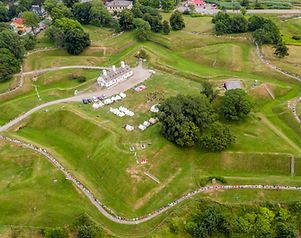
The fort is situated on 15 hectares (37 acres) of land in beautiful Annapolis Royal and is what remains of a long line of forts first erected by the Scots, then subsequently built by the French and lastly taken over and re-built by the British to become what we now know as Fort Anne National Historic Site.
WHAT MAKES IT UNIQUE
What Makes Acadian Annapolis Valley & Bay of Fundy Unique
This region holds the beginning and the breaking of the Acadian story, set against one of the most dramatic natural landscapes in Canada

Where the Acadian Story Begins and Nearly Ends
In 1605, French settlers established Port Royal on the shores of the Annapolis Basin, one of the first permanent European colonies in North America, and the true birthplace of Acadian civilization. For 150 years, Acadian communities flourished in the valley, building dykes, farming the reclaimed marshlands, and developing a distinct way of life unlike anything else in the New World. Then in 1755, at Grand-Pré, British forces ordered the Great Deportation — loading entire Acadian communities onto ships and scattering them across the Atlantic. Both sites stand today as National Historic Sites. Grand-Pré carries the additional designation of UNESCO World Heritage Site, recognising its universal significance to the story of human migration, forced displacement, and cultural survival.
The Bay of Fundy, Shaped by Acadian
The Bay of Fundy is home to the highest tidal range in the world, with water levels rising and falling by as much as 16 metres twice a day. Early Acadian settlers were among the first in North America to systematically adapt to these powerful tides, developing an ingenious system of dykes and aboiteaux (sluice gates) to reclaim fertile farmland from tidal marshes. Along the shores of the Minas Basin, these historic dykelands are still visible today, offering one of the most tangible connections to everyday Acadian life before the Deportation of 1755. In some areas, visitors can explore these landscapes, take in the scenery, and gain a deeper understanding of how the Acadians lived, worked the land, and built thriving communities — and what was lost when they were forced to leave.
Acadian Wine Country
The same fertile soils the Acadians farmed for generations now produce some of Atlantic Canada's finest wines. The Annapolis Valley is Nova Scotia's wine country — with L'Acadie Vineyards (named in honour of the Acadian heritage of the land) and Grand Pré Winery producing award-winning bottles from vines grown on historic Acadian ground. The region also offers farm-to-table dining, seasonal farmers markets, orchard tours, and award-winning ciders, a contemporary expression of the agricultural abundance the Acadians first cultivated here.
Adventure on the Bay of Fundy
Beyond its historical and cultural weight, the Annapolis Valley and Bay of Fundy region is one of the finest outdoor destinations in Atlantic Canada. Hike the dramatic headland of Cape Split for sweeping views of the Minas Basin, the very waters the deportation ships crossed in 1755. Explore the clifftops of Blomidon Provincial Park. Join whale watching and tidal boat tours from Digby, where humpbacks, finbacks, and minkes feed in the world's most productive tidal waters. The Bay of Fundy that shaped Acadian history is also, today, one of nature's great spectacles.
FEATURED EXPERIENCES
Road Trips That Pass Across
Annapolis Valley & Bay of Fundy
From a UNESCO World Heritage Site to the reconstructed first French colony, from world-record tides to award-winning Acadian wines, this region rewards every kind of traveller.
GETTING AROUND
Finding Your Way Through Acadian Annapolis Valley & Bay of Fundy
Grand-Pré and Port Royal sit along the Annapolis Valley and Bay of Fundy shore, between Halifax and Digby — a historic route that connects naturally to both the Halifax region and the Acadian communities of Southwest Nova Scotia.
Halifax to Grand-Pré
~1 hrs
Via Hwy 101
Grand-Pré to Port Royal
~1 hrs
Via Hwy 101
Annapolis Royal to Digby
~40 mins
Via Hwy 101
PLAN YOUR VISIT
Planning Your Acadian Annapolis Valley & Bay of Fundy Visit
Everything you need to know before you arrive.
Getting here
Grand-Pré is approximately 1 hour from Halifax via Hwy 101, one of the most accessible major Acadian heritage sites in Nova Scotia. Wolfville, minutes from Grand-Pré, makes an excellent overnight base. Port Royal and Annapolis Royal are approximately 2 hours from Halifax. Digby is approximately 2.5 hours via Hwy 101.
Getting around
A car is essential. Consider splitting the region over two days — Grand-Pré, Wolfville, and the Minas Basin on day one; Port Royal, Annapolis Royal, Fort Anne, and Digby on day two. The Annapolis Royal Historic Gardens are worth an unhurried morning on their own.
Best time to visit
May to October. Grand-Pré is most atmospheric in summer, the memorial garden is in bloom and the Interpretation Centre fully staffed. August 15 (National Acadian Day / Acadian Days at Grand-Pré) is the most significant day in the Acadian calendar. Fall wine harvest (September–October) adds a beautiful final chapter to the season.
FR
Language
The Annapolis Valley is predominantly English-speaking, but Grand-Pré National Historic Site and Port Royal National Historic Site are both fully bilingual, all programming, signage, and guided experiences are available in Acadian French and English, reflecting the universal significance of both sites to Acadian heritage.
KEEP EXPLORING
Other Acadian Regions of Nova Scotia
Acadian Annapolis Valley & Bay of Fundy is one of two heritage Acadian regions. Each has its own distinct character and communities.
_edited.jpg)